AI agent development for UK businesses
One agent, one named job, done end to end. It takes the goal, works out the route through your own systems, and leaves a record of every step. You bring the brief and the brand.
What every agent we ship is built from
Six parts, the same for every job. You approve the boundary once and the rest is ours.
- A goal, not a scriptIt is given the outcome and works out the route, so it handles the jobs where step four depends on what step three found.
- Tools it can reachYour CRM, inbox, calendar, documents and databases, connected through your own accounts and used the way a person would use them.
- Memory that carries overWhat it learned last week shapes what it does this week. It never asks you the same question twice.
- A boundary set firstIt reads widely and acts narrowly. The list of things it can change is short, deliberate and agreed before the build starts.
- A trace of every stepEvery tool call, every result, every decision, kept as a readable record in your workspace. You can always see why it did what it did.
- Escalation to a personAnything outside its brief lands on a named desk with the context attached. Nothing is quietly guessed.
Jobs we hand to an agent
The shape is always the same: a clear goal, a route that changes each time, and a result a person can act on.
- Brief you before a callReads the company, the contact, your CRM history and the news, and hands you a one-page briefing an hour before.
- Run the inboxSorts what needs a person from what does not, answers the second kind, and drafts the first with the record attached.
- Explain a number that movedChases a change in revenue, spend or churn back through the records behind it and returns the three that explain it.
- Turn a request into a specTakes a vague internal ask, checks it against what already exists, and returns something somebody can build from.
- Chase until it closesFollows up a supplier, a candidate or an unpaid invoice on a schedule, adapts to each reply, and stops when the job is done.
- Watch, then actMonitors a queue, a feed or a set of accounts around the clock and takes the agreed action the moment something changes.
The stack it runs on
A frontier model for the reasoning, MCP for the hands, and your existing systems doing the work. Nothing new for your team to learn.
- Claude
- Codex
- Gemini


Pick the one your team already talks to. The reasoning runs there; the work happens in your systems, under your logins.
- MCP
- n8n
- Slack
- Gmail
- HubSpot
- Notion
- Sheets
- Supabase
- GitHub


Fixed price quoted before anything starts, and everything runs in your own accounts under your own name. Nothing of ours needs switching off if we ever part ways.
The day-to-day, all of it automated
Fourteen jobs a specialist does by hand. The run does every one, on a schedule, inside the tools you already use. You see the results, not the work.
- Helper rules set up for complex tasks
- Action logs checked daily for accuracy
- Automated tasks tested across internal software
- Backup instructions created for unusual customer queries
- Response times monitored for rapid task completion
- System permissions set up to protect data
- Test scenarios run weekly to check decisions
- Task success rates tracked across all workflows
- Input data checked before processing instructions
- Approval steps added for high value actions
- Unhandled queries analysed to improve answers
- Running costs tracked daily to stay on budget
- Security controls updated to prevent unwanted behaviour
- Weekly performance summaries produced for management
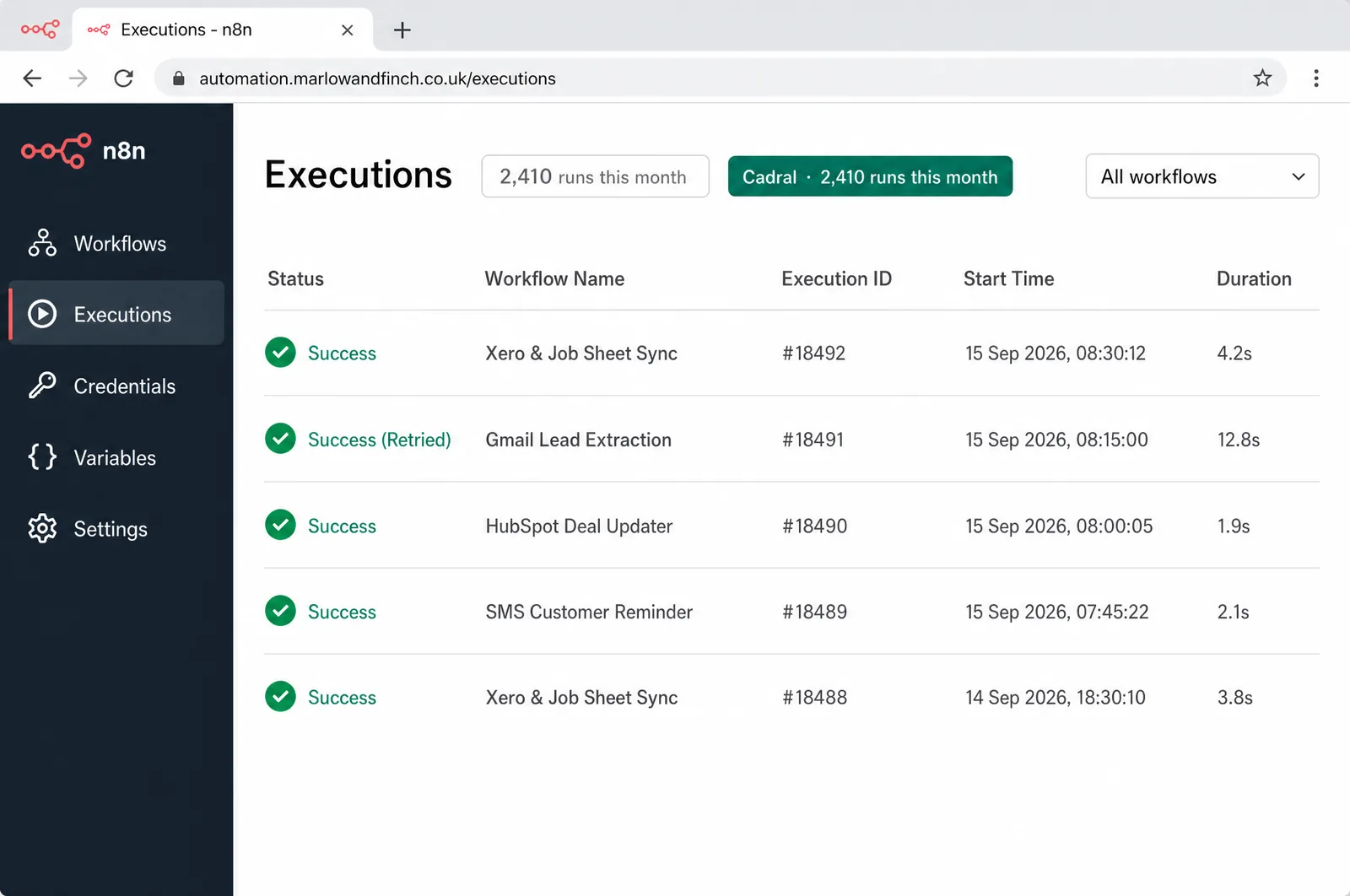
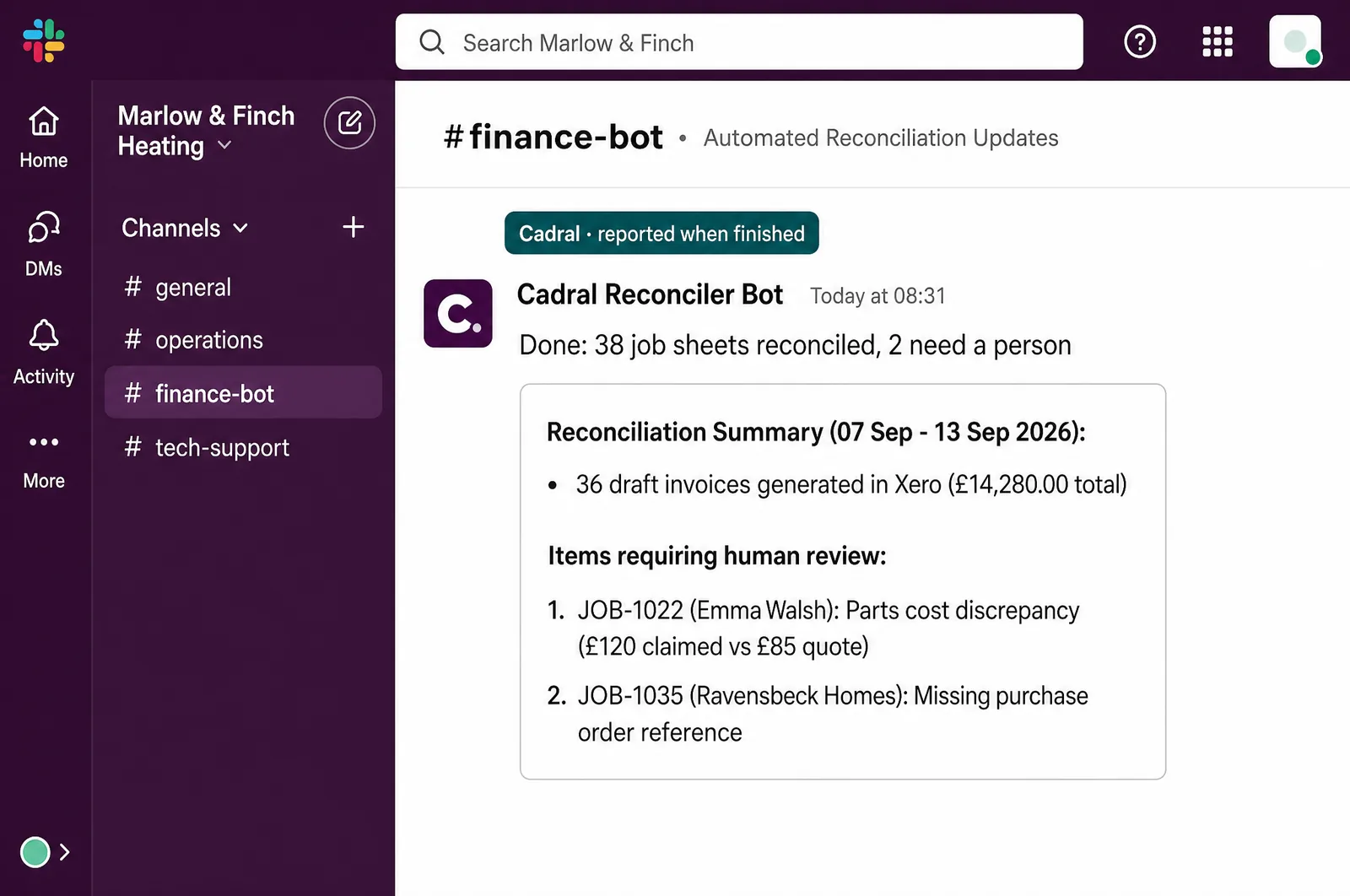
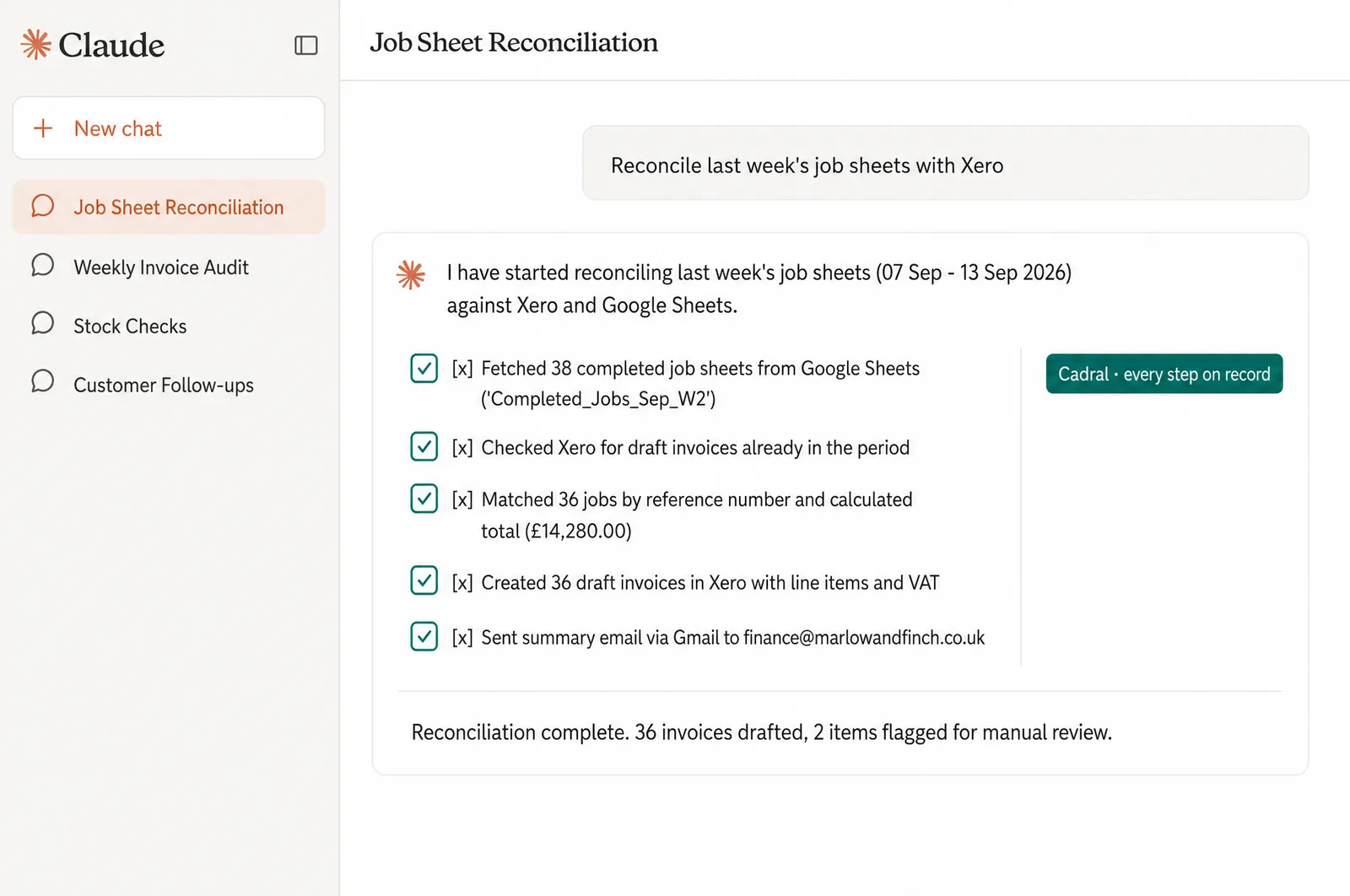
Illustrations of the tools in use, drawn for this page for an example business, Marlow & Finch. Every figure in them is an example, not a client's data, and any person in them is generated. Tap a picture to open it full size.
- ClaudeThe agent's brain
- n8nThe routes it runs
- SlackReports when it is done
- HubSpotOne of the systems it works in
- XeroAnother of them

The night shift
Nobody in the building. This is the job doing itself at eleven at night, and what you see in the morning.
Questions we get asked about this
- How is this different from workflow automation?
- A workflow follows the steps you set, in order, every time. An agent is given the goal and works out the route, which is what the jobs on this page need: what you do at step four depends on what you found at step three. We build both, and we tell you on the first call which one your job needs.
- What stops it doing something we did not intend?
- The boundary, and we design it before the capability. The agent can only reach the tools it has been given, with the permissions those tools were granted, and anything irreversible sits behind an approval step. Where that step sits is your setting: the usual start is approval on everything for the first fortnight, loosened once you have watched the trace.
- Can we see what it did?
- Yes, every step. The goal it was given, each tool it called, what came back and what it decided next, kept as a readable trace in your own workspace. That record is what makes the agent maintainable, and it is how we improve it month on month.
- Is it reliable enough for real work?
- Yes. It does the same job the same way at three in the morning as at three in the afternoon, and it never skips the boring step. Before it goes live we run it against your real cases, and where the output goes straight to a customer we scope it tighter and gate it. The cost of the worst plausible mistake is designed out per job, not hoped away.
- What do you need from us?
- The brief and the brand: the job it should own, who it serves, and how it should sound. Plus access to the systems it will work in, granted under your own accounts. Everything after that is us.
Got a question the list did not answer? Ask it on a call, or send us the brief and we will come back with a fixed price.
What usually gets built alongside it
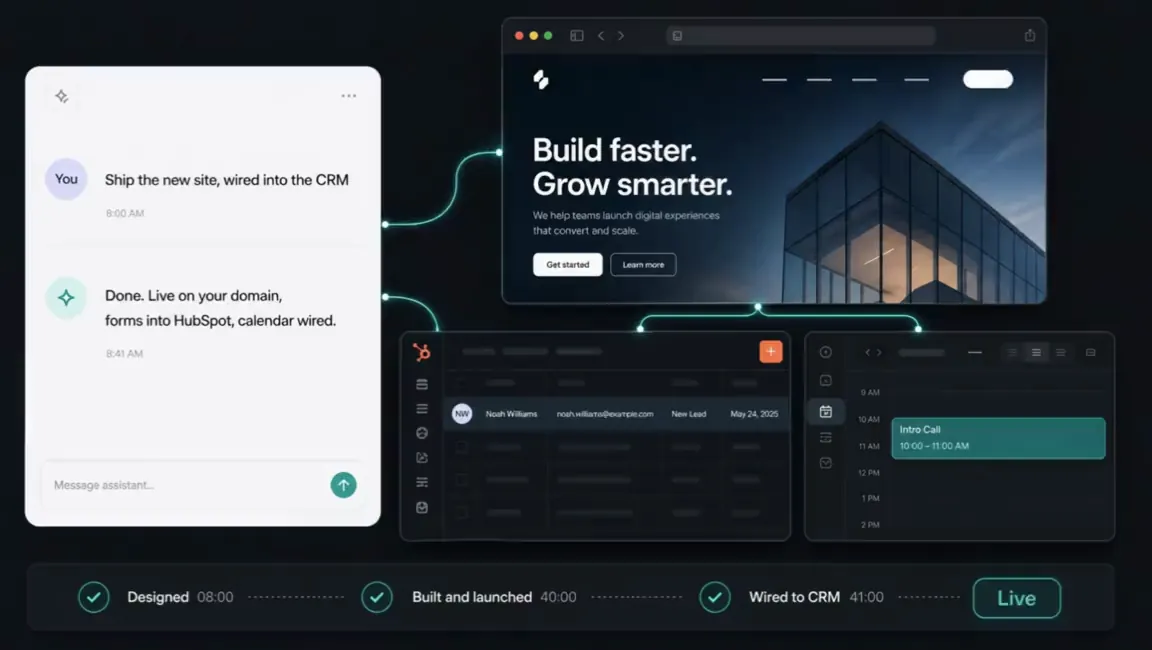
An agent is only as good as what it can reach. These are the connections and the knowledge it works from.
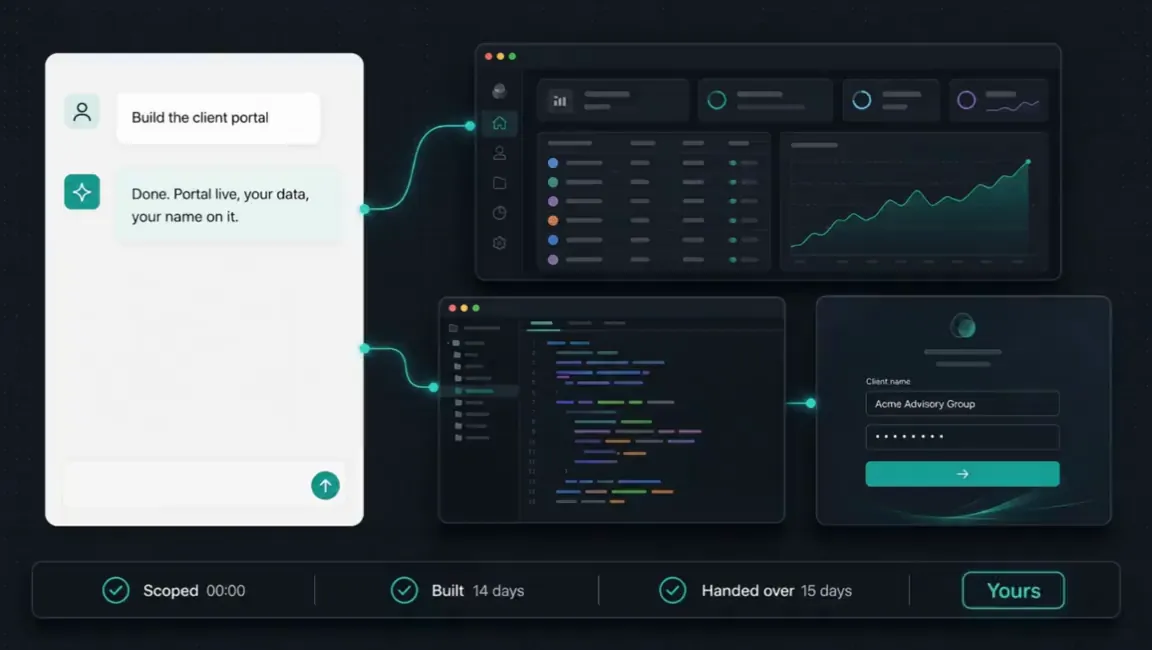
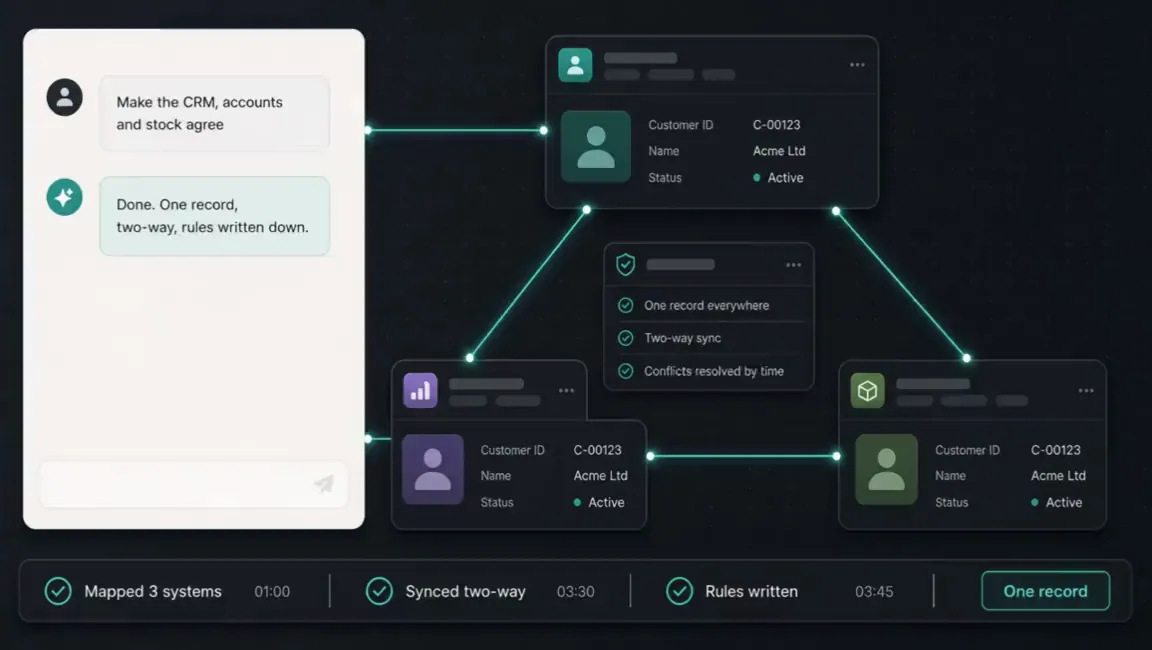
Tell us the job. We will tell you the price.
Twenty minutes and a fixed quote in writing. You bring the brief and the brand. Everything after that is us.
Not ready to talk? Run your own numbers on fifteen free tools, no email asked.
Elsewhere on this site
Each service is its own page. Pricing, the FAQ, the Manchester company page, the free tools and the blog sit alongside them.
Services
- SEO automation
- Content production
- Social media automation
- Brand and video production
- Paid ads automation
- Email marketing automation
- Lead qualification
- CRM automation
- Outbound automation
- AI voice agents, outbound
- Proposals and quotes
- Inbound automation
- AI chat widget
- AI voice agents, inbound
- WhatsApp and SMS
- Document processing
- Invoicing and payment chasing
- Reporting and dashboards
- Scheduling and onboarding
- Recruitment and HR
- Website design and build
- Custom software and apps
- AI agent development
- System integration
- Knowledge base and search
- Your whole stack, inside Claude
- Team training and upskilling
- AI strategy and roadmap
- Support and maintenance
