AI strategy consultancy: your automation roadmap, priced
Every process worth automating, found, priced and put in build order. Then we build it, launch it and run it, in your accounts and your name. You bring the brief and the brand.
Six things you get, all of them yours
A costed, ordered plan for the whole business, written in your figures. One sign-off from you on the order, then we start building.
- Every process, foundWe watch how the work actually happens, including the parts nobody wrote down and the workaround somebody built in a spreadsheet.
- A number on each oneHours at a real loaded cost, plus what errors cost where errors cost money. Your figures, so you can check the arithmetic.
- The build orderWhat has to be true before each item pays. Data first, then the processes that feed on it. The part most roadmaps skip.
- Build or buy, settled per lineSome of it is a subscription you already pay for and have not switched on. We say so, then switch it on.
- A fixed price on every itemEach build quoted before it starts. No day rates, no surprises.
- A document you ownPlain English and your own figures, yours to keep and hand to anyone. We are ready to start item one the week you sign it off.
From brief to running system
The roadmap is week one of a build. We carry every item on it through to launch, then keep it running and report on it.
- 01WatchInside the business, seeing how the work actually happens rather than how the manual says it does.
- 02Cost and orderEvery process priced in your own figures and sequenced by what has to be true first.
- 03BuildItem one built at its fixed price, in your accounts and under your name.
- 04RunLaunched, monitored and reported, with the next item already queued behind it.
What we map and build it with
Best in class for each job: the analysis in Claude, ChatGPT or Gemini, the process map in Miro, the numbers in Sheets, the roadmap in Notion, and every item priced against n8n, Make or Zapier.
- Claude
- ChatGPT
- Gemini
- Miro
- Sheets
- Notion
- Loom
- n8n
- Make
- Zapier
- MCP
- Slack


All of it runs in your own accounts and your own name, so nothing of ours needs switching off if we ever stop working together.
The day-to-day, all of it automated
Fourteen jobs a specialist does by hand. The run does every one, on a schedule, inside the tools you already use. You see the results, not the work.
- Operational workflows mapped across every company department
- Financial returns calculated for each automation option
- Priorities ranked by return and effort
- Detailed implementation roadmap published with target completion dates
- Software stack evaluated to identify integration gap opportunities
- Data security risks reviewed before launching automations
- Phased rollout plan created to prevent operational disruption
- Executive presentation delivered outlining potential annual cost savings
- Clear targets established for every proposed automation
- Vendor software costs benchmarked against custom automation builds
- Cross-department dependencies identified before starting technical builds
- Process inefficiency costs calculated using real payroll data
- Quarterly strategy reviews conducted to realign automation targets
- Implementation roadmap updated dynamically as new systems launch
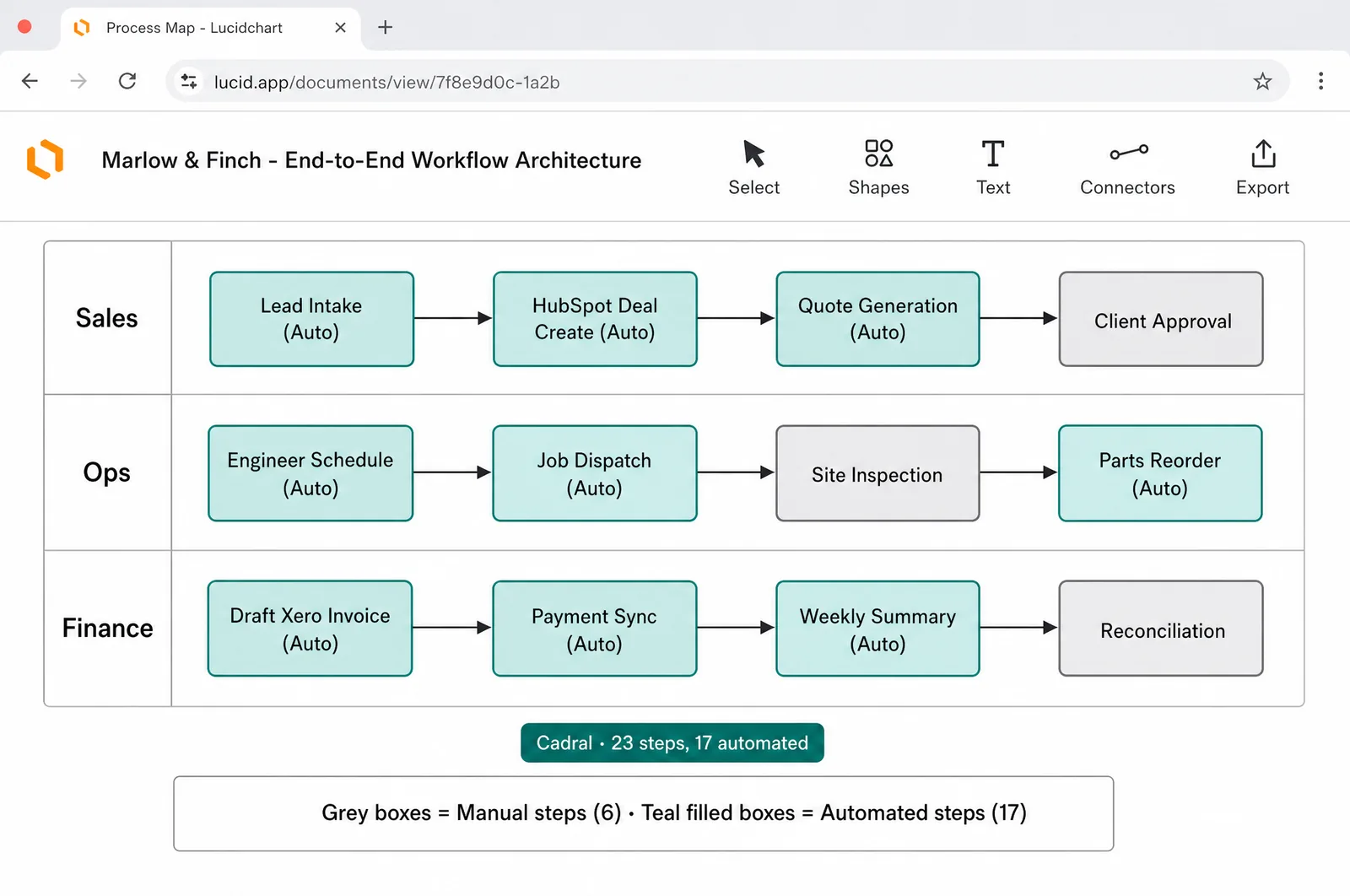
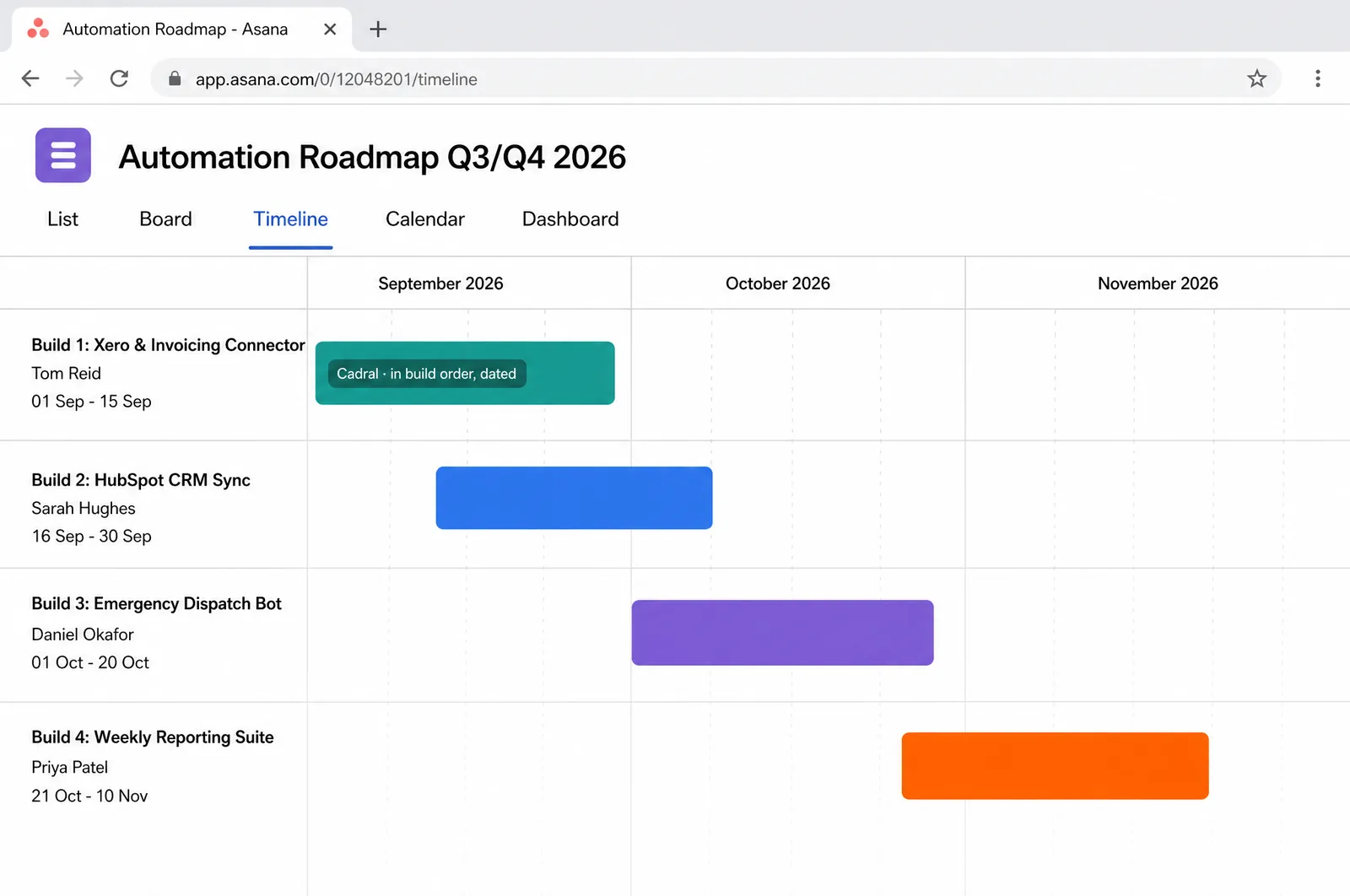
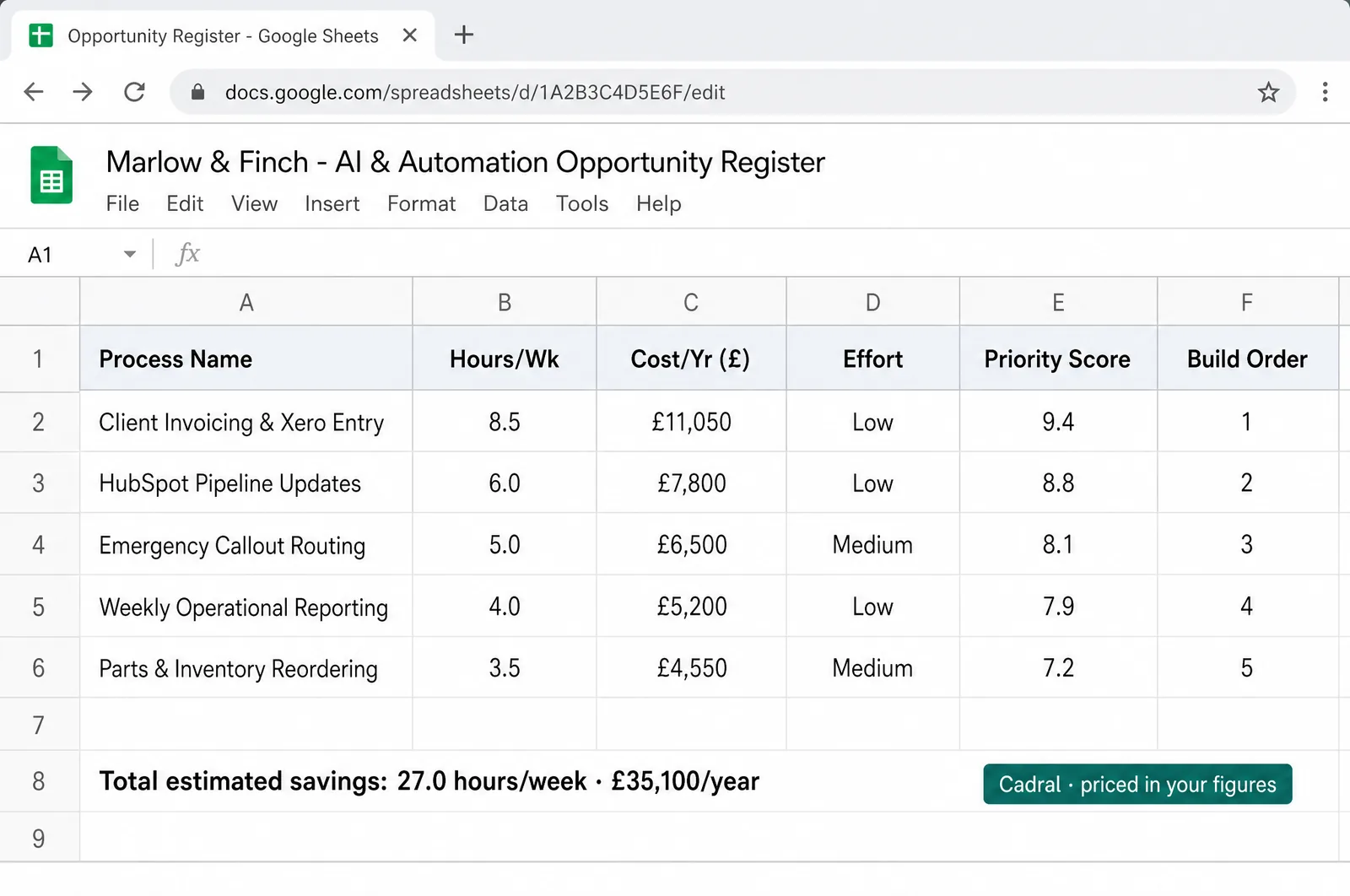
Illustrations of the tools in use, drawn for this page for an example business, Marlow & Finch. Every figure in them is an example, not a client's data, and any person in them is generated. Tap a picture to open it full size.
- Google SheetsEvery process priced in your figures
- LucidchartYour processes, mapped
- AsanaThe roadmap, dated
- XeroYour real cost figures
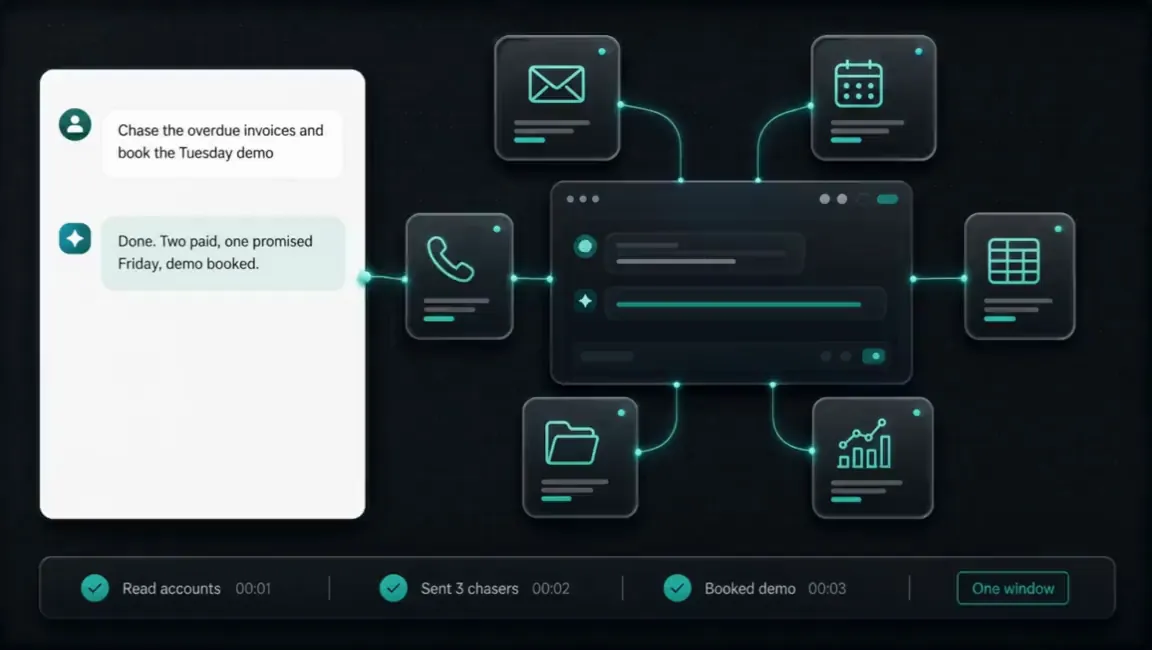
- ClaudeWhat gets built


The night shift
Nobody in the building. This is the job doing itself at eleven at night, and what you see in the morning.

Questions we get asked about this
- Do we have to build with you afterwards?
- No. The roadmap is a paid deliverable at a fixed price quoted before we start, and you own it outright: hand it to your own team or another supplier if you prefer. Some lines on it will be a subscription you already pay for, and we say so rather than quoting for a build. The reason to have us build it is that the team that costed every item can start the first one the week you sign off.
- How long does it take?
- One to three weeks depending on the size of the firm, and most of that is spent watching how the work actually happens rather than in workshops. The gap between the documented process and the real one is where the opportunity sits, and you only find it by looking. The roadmap lands as a document you can act on the day you receive it.
- How do you decide the order?
- Dependency first, then value. Automating a process that feeds on data nobody trusts produces the same wrong answers faster, so the roadmap puts the fix ahead of the exciting item. Every line carries a number in your own figures, which makes the order arithmetic rather than opinion.
- What if we already know what we want to automate first?
- Then we start there, at a fixed price, and the roadmap comes with it. The obvious build gets quoted and started; the map of everything else tells you what to do second and third. Where there are twenty candidates and two departments each certain theirs is the priority, the roadmap is what settles it.
- What do you need from us?
- The brief, the brand and the access: what the business is trying to achieve, how you present yourselves, and a login to the systems the work runs through. A few hours of your people's time while we watch how the work actually happens. Everything after that is us.
Got a question the list did not answer? Ask it on a call, or send us the brief and we will come back with a fixed price.
What usually gets built alongside it
The roadmap is week one. These are the systems that usually come off it first.
Tell us the job. We will tell you the price.
Twenty minutes and a fixed quote in writing. You bring the brief and the brand. Everything after that is us.
Not ready to talk? Run your own numbers on fifteen free tools, no email asked.
Elsewhere on this site
Each service is its own page. Pricing, the FAQ, the Manchester company page, the free tools and the blog sit alongside them.
Services
- SEO automation
- Content production
- Social media automation
- Brand and video production
- Paid ads automation
- Email marketing automation
- Lead qualification
- CRM automation
- Outbound automation
- AI voice agents, outbound
- Proposals and quotes
- Inbound automation
- AI chat widget
- AI voice agents, inbound
- WhatsApp and SMS
- Document processing
- Invoicing and payment chasing
- Reporting and dashboards
- Scheduling and onboarding
- Recruitment and HR
- Website design and build
- Custom software and apps
- AI agent development
- System integration
- Knowledge base and search
- Your whole stack, inside Claude
- Team training and upskilling
- AI strategy and roadmap
- Support and maintenance
