System integration: your CRM, accounts and stock on one record
CRM, accounts, billing, stock and support, made to agree on one record. Connected two ways, watched every run, priced before a line of code. You bring the brief and the access. Everything after that is ours.
Every system you run, on one record
Six things, all of them ours. The spreadsheet and the person retyping into it are retired on day one.
- Two-way sync, built properlyCRM to accounts, accounts to CRM. Change tracking and a rule per field, so no loops and no last write wins.
- One rule per field, written downWhich system wins for each field is decided once and kept as a document you own, not buried in a tool's settings.
- Duplicates found and mergedMatched on email, company number or name and postcode. One customer, one record, in every system.
- No API, still connectedScheduled exports, direct database access, or a browser doing what a person would. Older and specialist software included.
- Watched every runA heartbeat, a count reconciled against what was expected, and an alert the moment they disagree. Silence is never read as success.
- Your accounts, your keysService accounts with the narrowest scope, held in a secret store. Nothing breaks when someone leaves.
What we connect
The systems a UK business actually runs on, joined through your own accounts. Live on change where speed matters, batched overnight where a checking window is worth more.
- HubSpot
- Salesforce
- Zoho
- Xero
- QuickBooks
- Sage
- Stripe
- Shopify
- Microsoft 365
- Google Sheets
- Airtable
- Slack


- n8n
- Make
- Zapier
- MCP
- Claude
- Supabase


The right layer for each connection: n8n, Make or Zapier for simple one-way flows, code and MCP for two-way and load-bearing work.
Quoted before anything starts
Four terms, all in writing on day one. Ask any integrator you speak to for the same and watch the pause.
- Fixed price, quoted first
One number in writing before any code, never an estimate that grows in testing.
- One fixed price to build
Quoted in writing first and never revisited. Running costs sit in your own accounts where you can see them.
- Runs in your name
Your accounts, your API keys, your data. Nothing of ours to switch off if we ever part ways.
- The rules stay yours
Mapping and conflict logic delivered as a document, so replacing a CRM later means rewriting one side, not starting again.
The day-to-day, all of it automated
Fourteen jobs a specialist does by hand. The run does every one, on a schedule, inside the tools you already use. You see the results, not the work.
- Accounting and sales records kept matching automatically
- Connection failure alerts monitored to catch issues
- Duplicate database records found and merged automatically
- Data field mappings checked after software updates
- Instant triggers tested to create new records
- Data copy errors checked daily and resolved
- System limits checked to prevent busy period downtime
- Stock levels kept matching between shop and warehouse
- Payment details matched between billing and sales systems
- Security passkeys renewed to keep connections active
- Historic data checked and formatted before moving
- Two way matching rules updated as processes change
- Data backup snapshots saved before system changes
- End to end data reports sent weekly
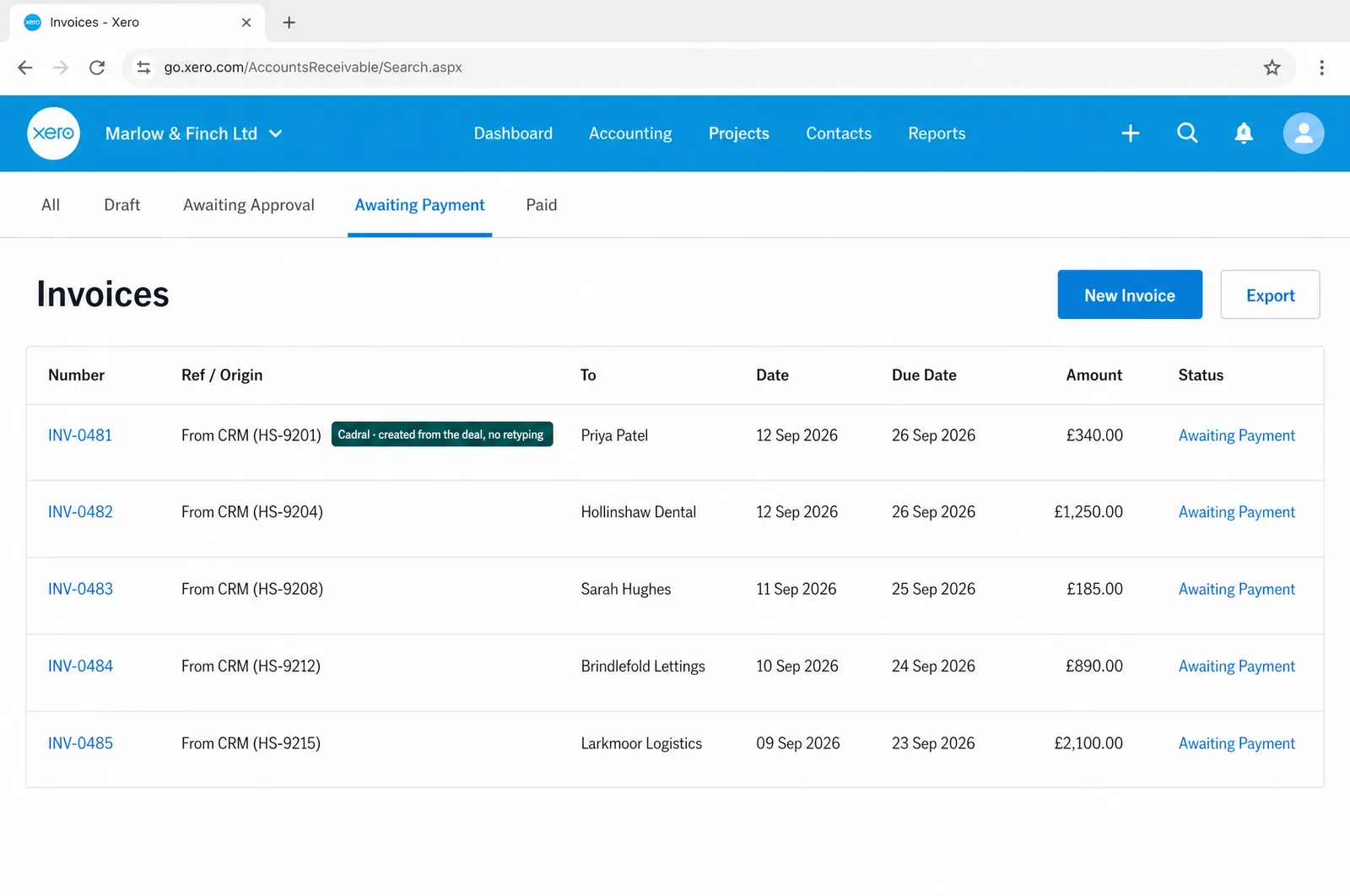
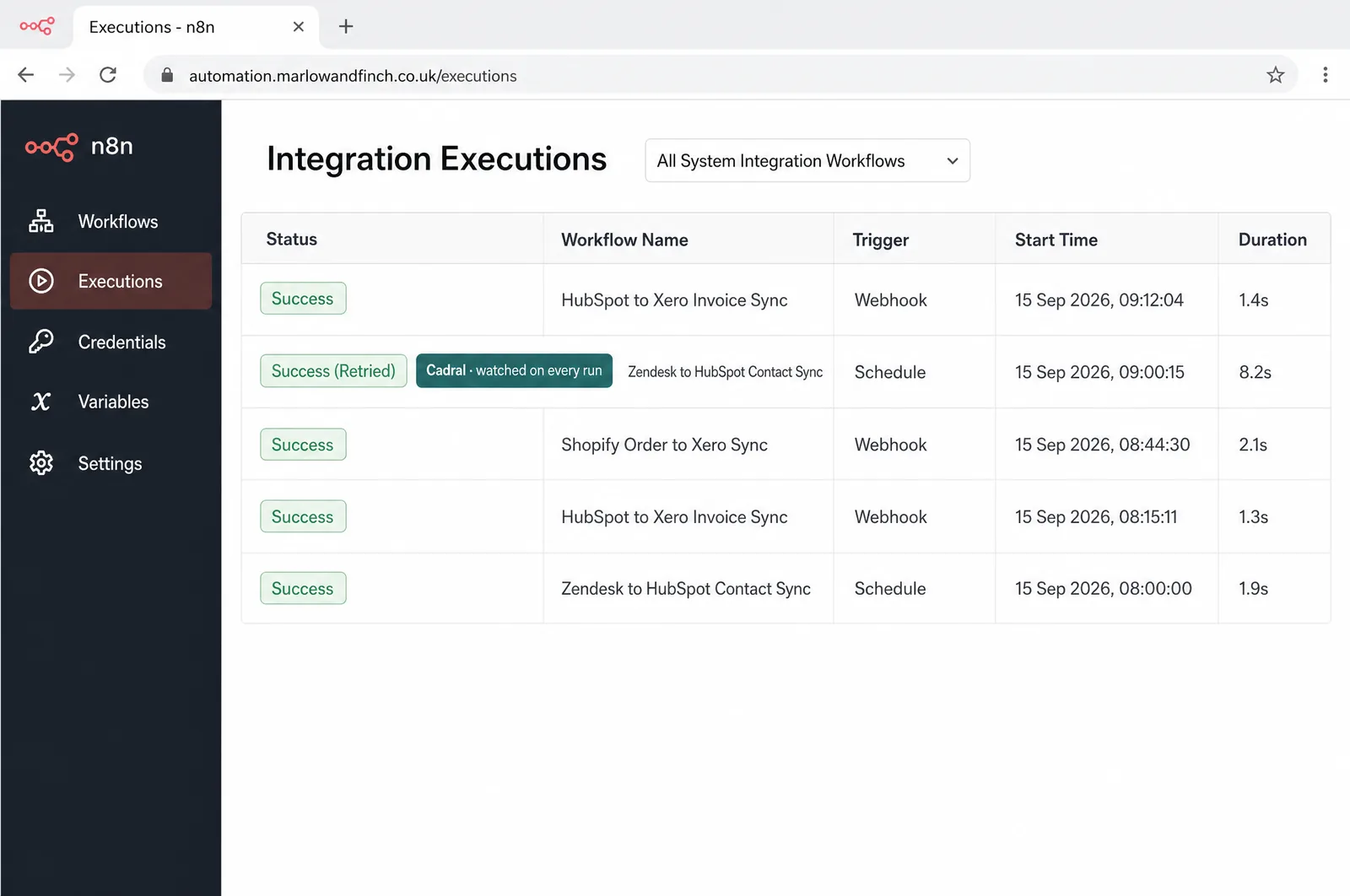
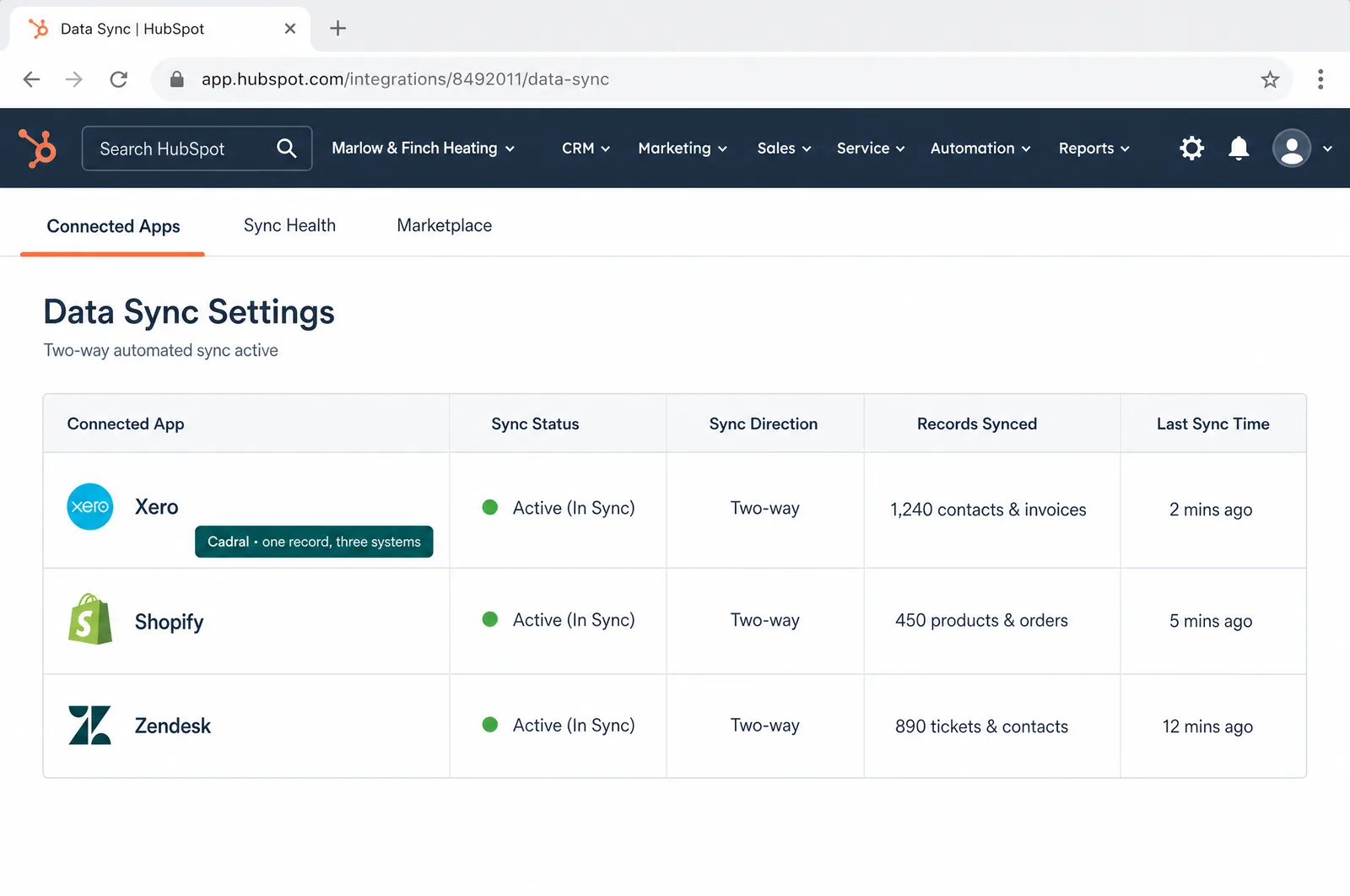
Illustrations of the tools in use, drawn for this page for an example business, Marlow & Finch. Every figure in them is an example, not a client's data, and any person in them is generated. Tap a picture to open it full size.
- HubSpotCustomers, deals and support
- XeroAccounts and billing
- ShopifyOrders and stock
- n8nThe two-way rules, written down
- ZendeskSupport, on the same record

The night shift
Nobody in the building. This is the job doing itself at eleven at night, and what you see in the morning.
Questions we get asked about this
- Can you connect anything to anything?
- Yes. Anything with an API connects directly, and we have routes for the systems without one: scheduled exports, direct database access, or a browser doing what a person would do. Older and specialist software included. Which route applies is settled in the scope, and the price is fixed before we start.
- Is two-way sync possible, or only one-way?
- Both, and two-way is built properly: change tracking, a record of which side moved last and a rule for every field, so there is no loop and no last write wins. It is more work than one-way, which is why the scope names it and the fixed price includes it, rather than either of us discovering it at testing.
- Where does this sit against Zapier or Make?
- We use them where they fit. One-way, low-volume, single-record flows run well on n8n, Make or Zapier, and we build them there, in your account. Two-way sync, conflict rules, audit trails and volume need code, and we write that too. You get the right layer for each connection, not one tool stretched over everything.
- What happens when an API changes or a token expires?
- It fails loudly, on purpose. Every build carries a heartbeat, a count reconciled against what was expected, and an alert the moment they disagree, sent to you and to us. A sync that stops and says so is cheap to fix. One that keeps running while quietly dropping records is the expensive kind, and ours are built so that cannot pass unnoticed.
- What do you need from us?
- The brief: which systems, which records, and what a correct result looks like. The brand, wherever anything customer-facing is involved. Access to the accounts, which stay in your name. Everything after that is us.
Got a question the list did not answer? Ask it on a call, or send us the brief and we will come back with a fixed price.
What usually gets built alongside it
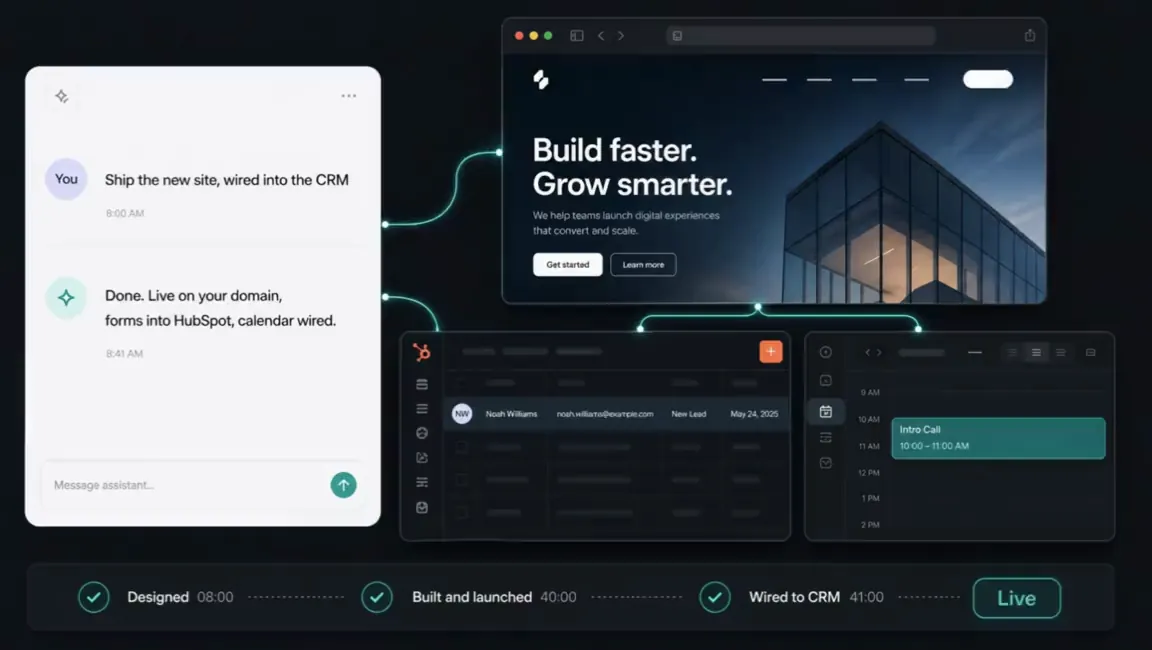
An integration is built because something else needs the joined-up record. These are the systems that usually consume it.
Tell us the job. We will tell you the price.
Twenty minutes and a fixed quote in writing. You bring the brief and the brand. Everything after that is us.
Not ready to talk? Run your own numbers on fifteen free tools, no email asked.
Elsewhere on this site
Each service is its own page. Pricing, the FAQ, the Manchester company page, the free tools and the blog sit alongside them.
Services
- SEO automation
- Content production
- Social media automation
- Brand and video production
- Paid ads automation
- Email marketing automation
- Lead qualification
- CRM automation
- Outbound automation
- AI voice agents, outbound
- Proposals and quotes
- Inbound automation
- AI chat widget
- AI voice agents, inbound
- WhatsApp and SMS
- Document processing
- Invoicing and payment chasing
- Reporting and dashboards
- Scheduling and onboarding
- Recruitment and HR
- Website design and build
- Custom software and apps
- AI agent development
- System integration
- Knowledge base and search
- Your whole stack, inside Claude
- Team training and upskilling
- AI strategy and roadmap
- Support and maintenance
