AI budget planner
What to put in the budget line for automation, before anyone has quoted you anything. Build, discovery, your own people's time, running cost and contingency, split so you can see which part comes back every year.
- FREE
- NO EMAIL
- 2 MINUTES
- NOTHING SAVED OR SENT
BUDGET FOR YEAR ONE
£13,872
£120 a month of that comes back every year after. The other 73% is one off.
- Mapping it first3 days at £500
- £1,500
- Building it3 × £2,500
- £7,500
- Your own people's time40 hours at £28
- £1,120
- Running it for 12 months£120 a month
- £1,440
- Contingency20% of everything above
- £2,312
- Year one, all in
- £13,872
- Every year after, if you build nothing newRunning cost only. No build, no discovery, no contingency.
- £1,440
WORKED EXAMPLE, NOT A QUOTE
Three processes automated in a year. Three days mapping them before anything is built, at £500 a day. £2,500 a build. Forty hours of your own people’s time at £28 an hour. £40 a month each to run, plus twenty percent contingency.
£13,872
in year one. £120 a month of that keeps coming after the building stops, which is the line most budgets forget.
Those are the numbers the planner opens on. Change any of them and every figure in the planner moves as you type.
What this budget assumes
- Which of these numbers are real, and which are ours to set?
- One is anchored: £500 a day is the published UK contract median for an Automation Engineer (ITJobsWatch, six months to 26 August 2026, 121 quoted rates). Everything else, the £2,500 build included, is a round number waiting for yours, and every field is editable.
- Why is our own people's time a budget line?
- Because it is the line that gets missed and then blamed. Someone has to walk us through the process, surface the edge cases and sign off the result, and that time is never free. Budget for it and it stops being a surprise.
- Why twenty percent contingency and not ten, or forty?
- Twenty is the default because it is roughly the point at which a budget survives the first surprise without a second conversation. It is a judgement, not a measurement, which is why it is a slider. Move it and see what it does.
- What is the difference between year one and the years after it?
- Discovery and building happen once; running cost happens every year. The headline is year one, and underneath it sits the smaller number that comes back annually whether you build anything new or not. Carry only the first figure and month thirteen brings a surprise.
- Does this tell us whether automating is worth it?
- No. This is the cost side only. Whether it pays back is the ROI calculator's question, and it is a different one: this tool tells you what to ask finance for, that one tells you what you get in return.
- What does it deliberately leave out?
- Change management, a failed build that has to be redone, and any software licence you would have bought anyway. The first two have no honest number and the third is not caused by the automation, so the figure you get is the conservative one.
A number you can take to whoever holds the budget
The figure is only as good as the build cost you put in it. Twenty minutes with us replaces that guess with a fixed price, quoted in writing before anything starts.
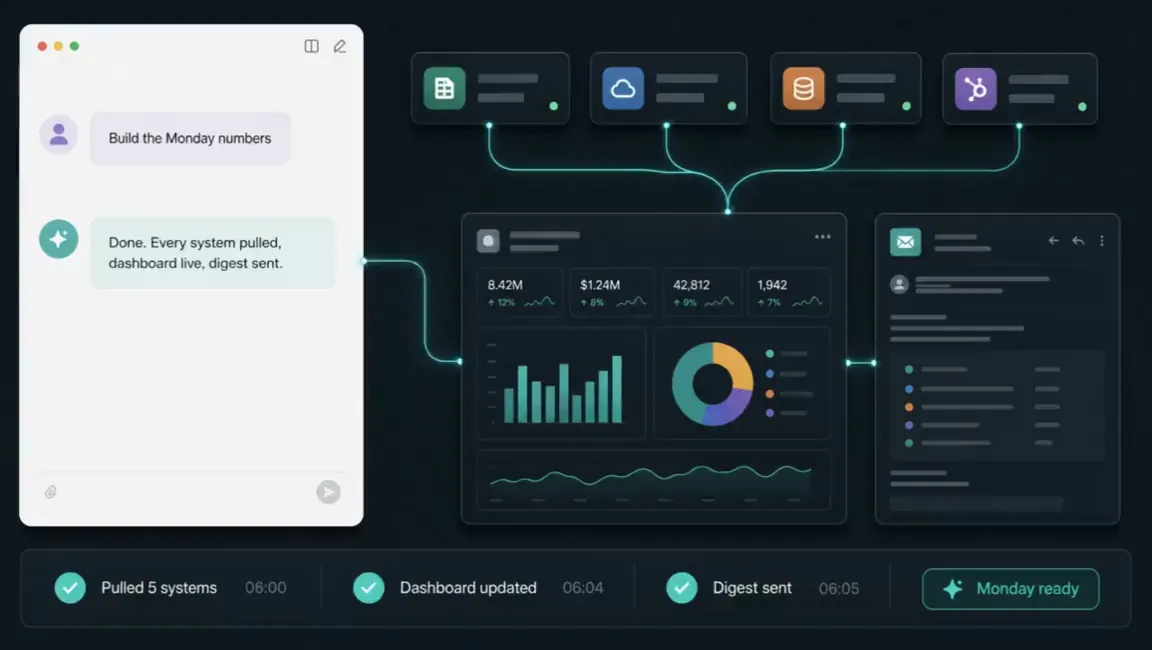
Ran your numbers? Send us the figures and we will come back with a fixed price, or book twenty minutes and talk them through.
Elsewhere on this site
Each service is its own page. Pricing, the FAQ, the Manchester company page, the free tools and the blog sit alongside them.
Services
- SEO automation
- Content production
- Social media automation
- Brand and video production
- Paid ads automation
- Email marketing automation
- Lead qualification
- CRM automation
- Outbound automation
- AI voice agents, outbound
- Proposals and quotes
- Inbound automation
- AI chat widget
- AI voice agents, inbound
- WhatsApp and SMS
- Document processing
- Invoicing and payment chasing
- Reporting and dashboards
- Scheduling and onboarding
- Recruitment and HR
- Website design and build
- Custom software and apps
- AI agent development
- System integration
- Knowledge base and search
- Your whole stack, inside Claude
- Team training and upskilling
- AI strategy and roadmap
- Support and maintenance
